
They Asked Us To Build An Ordering Platform.
We Ended Up Automating The Entire Supply Chain.
Build a web application where customers could place orders.


6
Core modules
3
Integrations
1
Connected platform
Project Snapshot
- Industry
- B2B Logistics & Distribution
- Platform
- Supply Chain & Finance Management Platform
- Focus
- Business Process Automation & Financial Compliance
- Integrations
- Pennylane · VIES · Email Services
- Core Modules
- • Ordering• Inventory• Logistics• Supplier Portal• Finance• Document Automation
The brief
The original request sounded straightforward.
Build a web application where customers could place orders.
Administrators would approve them. Suppliers would fulfill them. Logistics companies would deliver them.
Simple.
But once we mapped how the business actually operated, we discovered something much bigger.
The order was only the starting point.
The real work happened after someone clicked Place Order.
The Order Was Never The Difficult Part
A customer places an order in seconds.
Behind the scenes, the business begins coordinating multiple departments.
Inventory
Suppliers
Transportation
Accounting
Compliance
Invoices
Proof of delivery
What We Discovered
Every department depends on the previous one doing its job correctly.
One missing document or delayed approval could stop the entire workflow.
The business didn't need another ordering system.
It needed one operational platform that could coordinate every team involved in fulfilling an order.
Engineering Note
Every document in the platform is generated from a business event rather than uploaded manually, creating a complete audit trail from order to delivery.
The order was only the starting point. The real work happened after Place Order.
One Order Can Trigger Multiple Businesses
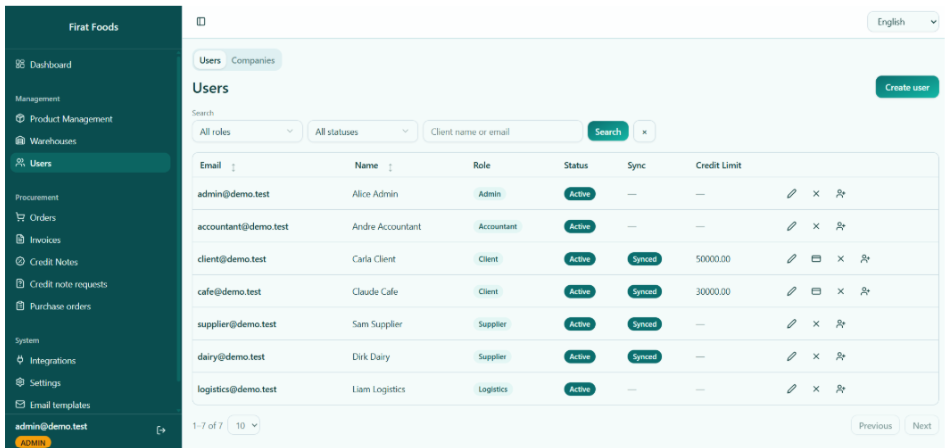
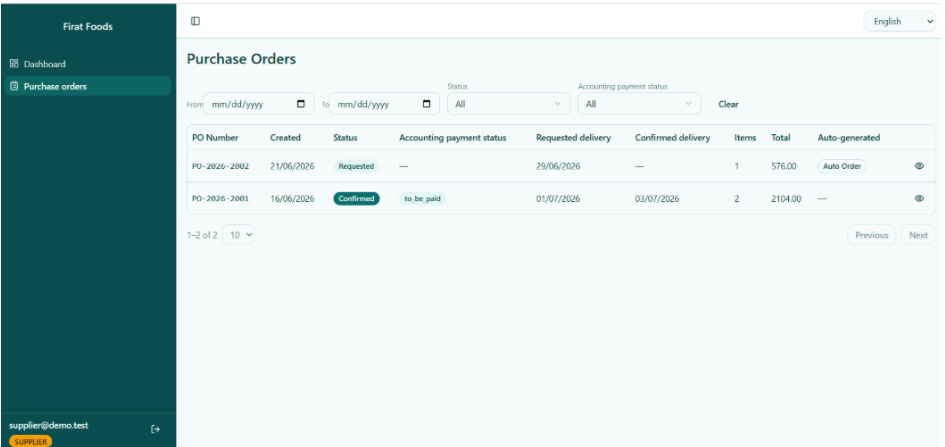
Admin, supplier, and logistics portals with isolated permissions for each participant in the supply chain.
This wasn't a company with one internal team.
Every order involved external suppliers. Independent logistics providers. Internal administrators. Finance teams. Customers.
Each group needed access to different information.
Giving everyone full visibility wasn't an option.
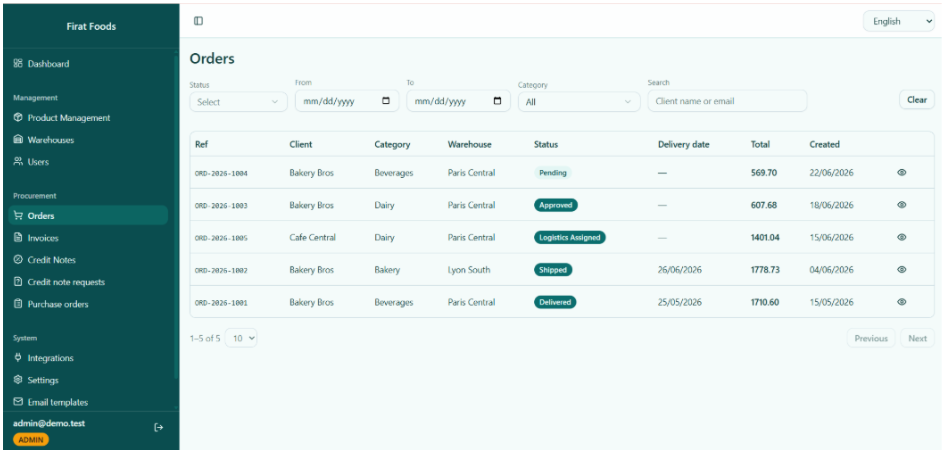
So we designed the platform around role-based workflows instead of shared dashboards.
Each participant only sees what they need to complete their part of the process.
Behind The Scenes
The platform supports dedicated portals for Clients, Admins, Suppliers, Logistics providers, and Accountants, each with isolated permissions and workflows.
We Couldn't Treat Invoices As Documents
One thing became obvious during planning.
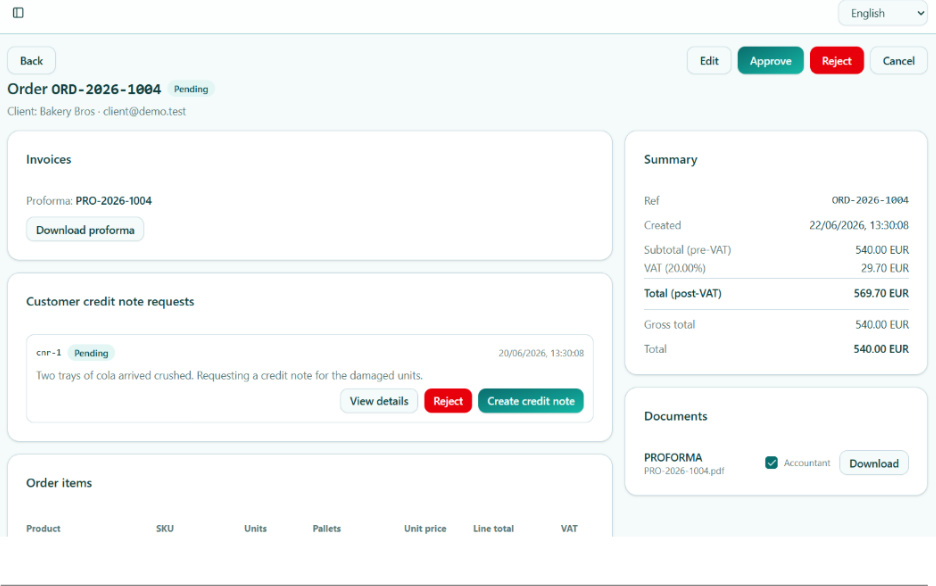
Invoices aren't files. They're the result of everything that happened before them.
Products need to exist. Stock must be available. Deliveries must be confirmed. Proof of delivery must be uploaded.
Only then should an invoice exist.
Instead of allowing invoices to be uploaded manually, the platform generates them automatically from completed business events.
This removes reconciliation work while keeping financial records consistent.
Engineering Note
Invoice numbers are immutable, generated by the platform, and only created after delivery confirmation and proof of delivery are available.
Compliance Starts Long Before Accounting
Originally, the project was planned around integrating with EBP as the accounting platform.
As the project evolved, Pennylane became the preferred accounting system.
That change wasn't just swapping one API for another.
It required redesigning how accounting entities, customers, invoices, tax mappings, and synchronization were prepared inside the platform.
Instead of treating accounting as a final export step, we designed the operational workflow so accounting data was already structured before invoices were created.
Engineering Note
Customer entities are synchronized with Pennylane before financial documents are generated, ensuring invoices are accounting-ready instead of requiring manual reconciliation later.
Compliance Doesn't Happen At The End
Operating across Europe introduced another challenge.
VAT rules change depending on where customers operate and whether VAT registrations remain valid.
Instead of expecting administrators to manually verify tax numbers, the platform validates VAT information through VIES before financial documents are generated.
If a VAT registration changes, future invoices automatically follow the correct tax rules.
Compliance becomes part of the workflow rather than another administrative task.
Customer onboarding validation
Pre-invoice VAT checks
Periodic registration monitoring
Automatic tax rule updates
Interesting Challenge
VAT validation isn't performed once. The platform validates during customer onboarding, before invoicing, and periodically afterwards to detect registration changes.
Supporting Multiple Languages Wasn't About Translation
The client operates across several European markets.
Simply translating buttons wouldn't solve the problem.
Different companies. Different users. Different countries. Everyone needed the system to feel native.
So multilingual support became part of the architecture instead of an afterthought.
Language preferences are stored per user, companies can define defaults, and every interface resolves dynamically without requiring separate versions of the application.
Engineering Note
Every user profile stores its preferred language while the frontend and backend both resolve localized responses using the same translation framework.
The Platform Thinks Ahead
Automation rules
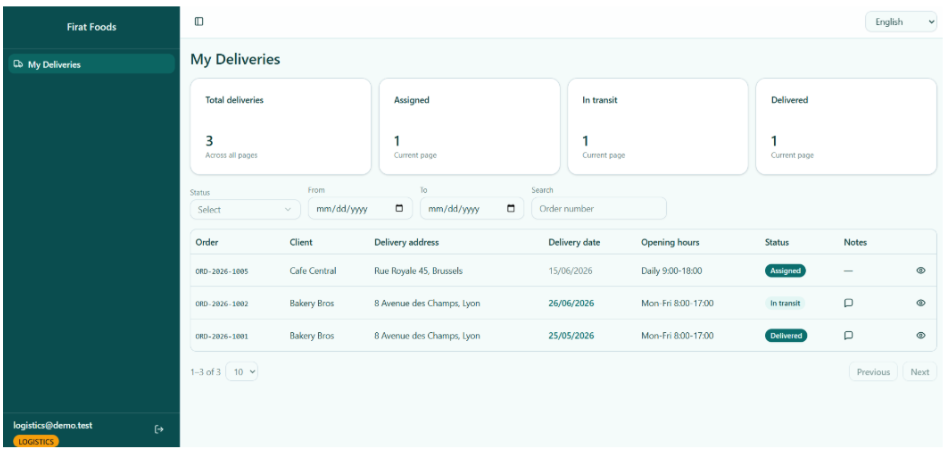
Logistics delivery dashboard with status tracking, operational rules, and real-time fulfillment updates.
Engineering Note
Financial controls are built directly into the order lifecycle, including credit limit validation, split invoicing, approval workflows, and delivery-based invoice generation.
One of the biggest operational improvements came from automation.
Stock running low? Purchase orders are prepared automatically.
Customer exceeds their credit limit? Orders are blocked before entering fulfillment.
Partial delivery? Only delivered products become invoiceable.
Proof of delivery missing? Financial documents remain locked.
Instead of relying on people remembering policies, the platform enforces them automatically.
The Outcome
Orders move through structured workflows.
Suppliers collaborate without seeing sensitive business information.
Logistics providers update deliveries in real time.
Financial documents generate automatically.
Accounting stays synchronized with Pennylane.
What started as an ordering platform became a connected operational system.
Instead of digitizing paperwork, the platform automates how the business moves products, documents, and financial information from one department to the next.
Explore The Demo
Experience the platform from the perspective of customers, administrators, suppliers, logistics providers, and finance teams, and see how ordering, fulfillment, compliance, and accounting work together inside one connected operational platform.